
Your team runs a CRM, a data provider, a sequencer, a call recorder and a forecasting tool. Ask any rep who the company knows at their top account, and the answer is still a Slack message that says "anyone?"
That's the gap in most enterprise sales stacks. They're very good at recording who exists and what reps did. They rarely show who can get you in the room, and in enterprise sales, access is what moves a deal.
The stack below is organized by the layers an enterprise deal moves through, starting with the one most teams skip. If you're here for the career side of selling enterprise software, start with our enterprise sales strategy guide instead.
What is enterprise sales software?
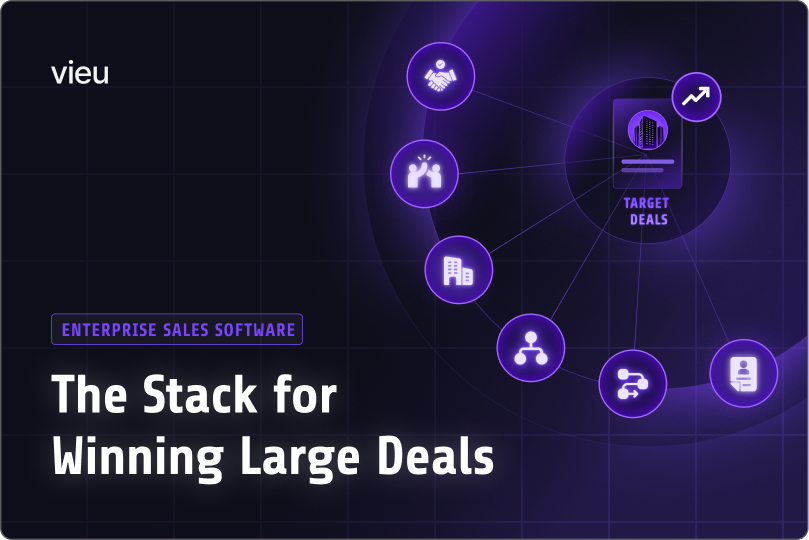
Enterprise sales software is the set of tools enterprise sales teams use to find, reach, close and expand large accounts. It's a stack rather than one product: a CRM at the center, with layers for relationships, contact data, engagement, conversations, deal management and forecasting connected to it.
What separates enterprise sales software from SMB tools
- Security and compliance. SSO, SOC 2 reports and data residency options are usually procurement requirements, and a tool without them rarely gets past security review.
- Admin controls and permissions. Role-based access, territory rules and audit logs that hold up across hundreds of users.
- Deep CRM integration. Two-way sync with Salesforce, HubSpot or Dynamics that respects your custom objects and fields.
- Buying committees, not single contacts. Gartner's 2025 survey of 632 B2B buyers found buying groups range from five to 16 people across as many as four functions, so tools need to track many stakeholders per account.
- Data governance. Clear answers on where data comes from, who can see it and how long it's kept.
The enterprise sales stack, layer by layer
Every layer reads from and writes back to the CRM. The order below follows a deal from first access to forecast.
1. Relationship intelligence: Vieu
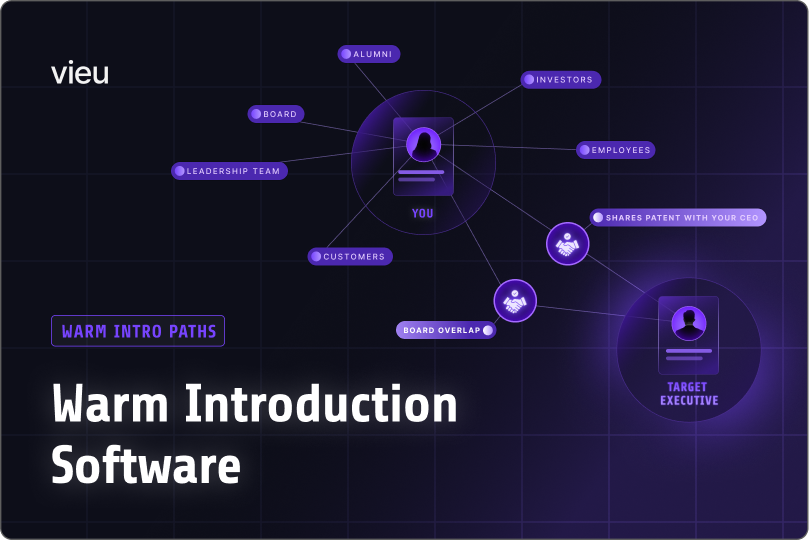
CRMs and data tools record who exists and what your reps did. They don't show who knows whom. That's the layer most enterprise stacks are missing, and it often decides whether your first meeting is with the economic buyer or three levels below.
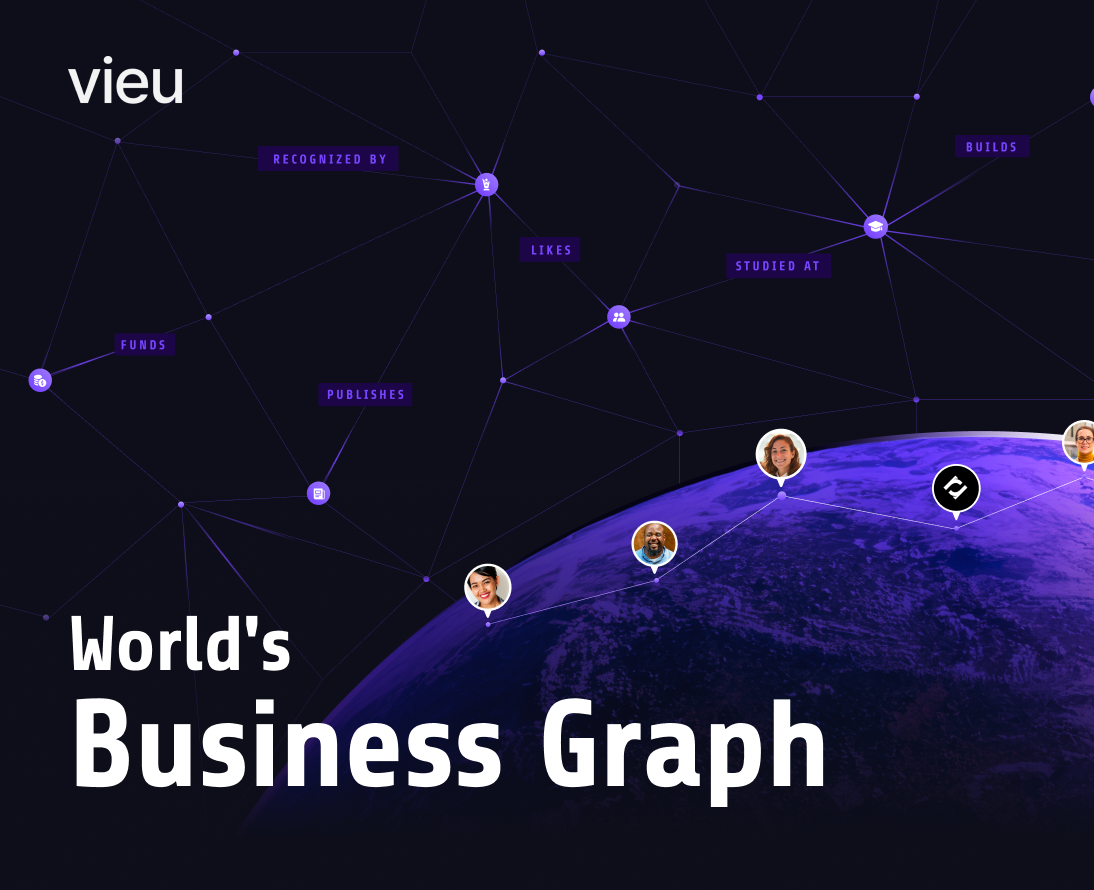
Vieu maps 4 billion people and companies and 14 billion relationships, inferred and verified from shared work history, board affiliations, co-authored research and joint ventures. The graph is built from records rather than connections people chose to add, so a path can show up even when nobody on your team has logged it. Teams can also connect work email, calendar and CRM to add their own signals, though it's optional.
For enterprise teams, that means three things:
- Warm paths into buying committees: for each stakeholder, who in your company, board or investor base can make the introduction.
- Executive-to-executive connections, such as the fact that your CRO worked alongside the target's CFO six years ago.
- Coverage that stays when a rep leaves, because the relationships live in the graph rather than in one person's inbox.
When you're ready to ask, Vieu drafts a note to the introducer and a forwardable message for the target, sends the request from Slack, and syncs shortlisted intros to the CRM. Nobody is contacted until the introducer agrees.
For AI-driven account research, a graph query returns in about 287 milliseconds, against around 40 seconds for an LLM searching the open web, and Claude and Gemini can query the graph directly through Vieu's MCP server.
Vieu works alongside your CRM rather than replacing it, and it doesn't run email sequences.
2. CRM: Salesforce, HubSpot, Microsoft Dynamics 365
The CRM is the system of record: accounts, contacts, opportunities and the pipeline every other layer depends on. Salesforce is the common choice for large, heavily customized sales orgs with a dedicated admin team. HubSpot suits teams that want sales and marketing on one platform with less admin overhead, and its Enterprise tier adds custom objects and advanced permissions. Microsoft Dynamics 365 Sales fits companies already standardized on Microsoft 365 and Teams.
3. Contact and company data: ZoomInfo
ZoomInfo is the most complete data suite in this layer: verified emails, direct dials, org charts, technographics and intent signals, with its deepest coverage in North America. It tells you who exists and how to reach them. It doesn't tell you who can vouch for you, which is what the relationship layer adds.
4. Sales engagement: Outreach and Salesloft
Engagement platforms run sequences: the emails, calls and LinkedIn steps that keep follow-up consistent across hundreds of accounts. Outreach is still an independent company. Salesloft merged with Clari in December 2025, and since September 2026 the combined company has run under the Salesloft name, pairing engagement with forecasting.
5. Conversation intelligence: Gong
Gong records and analyzes calls, meetings and emails, then turns them into deal-risk flags and coaching moments. It now calls itself a Revenue AI Operating System, with forecasting, engagement and enablement products built on the same data, plus an MCP server for AI agents.
6. Forecasting and pipeline inspection: Clari Forecast
Forecasting tools roll up pipeline by rep, team and region and show where deals are slipping. Clari Forecast kept its name inside Salesloft after the merger. Gong and Salesforce sell forecasting too, so the best fit is usually the one closest to where your pipeline data already lives.
7. CPQ and deal desk: Salesforce Revenue Cloud
Enterprise deals come with non-standard pricing, multi-year terms and long approval chains. CPQ tools build the quote and route the approvals. Salesforce CPQ stopped being sold to new customers in March 2025. Its successor is Salesforce Revenue Cloud, and moving to it is a re-implementation rather than an upgrade.
8. Sales enablement and content: Seismic
Enablement platforms put the right deck, case study or security document in front of each stakeholder and show what actually gets used. Seismic and Highspot, the two largest players in the category, announced a merger in February 2026, with the combined company set to operate as Seismic.
How to evaluate enterprise sales software
Security and compliance
Ask for the SOC 2 report, SSO support and data residency options before the demo, not after. If security review is going to stall the purchase, it's better to know in week one.
CRM integration depth
Check whether the integration is two-way, whether it respects your custom objects, and what happens when records conflict. A shallow sync creates duplicate data that RevOps has to clean up later.
Adoption by reps
The best tool is the one reps open without being reminded. Look for tools that work where reps already spend their day, such as the CRM, email, Slack or the browser.
Admin effort
Find out who maintains the tool after launch and how many hours a month that takes. Some enterprise tools need a dedicated admin; budget for that up front.
AI and agent access
More research now happens inside AI assistants. Check whether an agent can query the tool directly, usually through an MCP server, or whether every answer needs a person clicking through a UI.
Pricing at enterprise seat counts
List prices rarely survive negotiation at 200 seats, but platform fees, onboarding fees and usage credits often do. Ask for the full three-year cost, including add-ons.
New data or repackaged data
Ask where the tool's data comes from. Many tools repackage the same CRM and email data you already have. A tool earns its seat when it adds something your stack can't see today.
Where AI agents fit in the 2026 enterprise stack
Agents now do a growing share of account research and call prep. That changes what each layer needs to offer: it has to be queryable by an agent, fast enough to sit inside a workflow, and reliable enough that the agent's answer can be trusted.
MCP servers are becoming the standard way in. Gong, Salesloft and Vieu all offer one, so an assistant can pull call notes, pipeline data and relationship paths without a rep switching tabs.
The relationship layer matters here because it's the question agents are worst at answering from the open web. An agent can ask Vieu "who do we know at this account?" and get a ranked answer in under a second, instead of scraping LinkedIn and guessing. Query Vieu from Claude or Gemini.
Sample stacks by stage
Who owns which layer, and how the stack gets maintained, is an enterprise sales operations question as much as a sales one.
FAQ
What software do enterprise sales teams use?
Most enterprise sales teams run a CRM as the system of record, plus layers for contact data, sales engagement, conversation intelligence, forecasting, CPQ and enablement. A growing number add relationship intelligence, which shows who in the company, board or investor base can introduce them to the buyer.
What's the best CRM for enterprise sales?
It depends on your org. Salesforce is the common choice for large, heavily customized sales teams with dedicated admins. HubSpot suits teams that want sales and marketing on one platform with less admin work. Microsoft Dynamics 365 fits companies already standardized on Microsoft.
What is relationship intelligence software?
Relationship intelligence software maps who knows whom and how strongly, so a sales team can find the warmest path to a specific buyer. It complements the CRM: the CRM records what your team did, while relationship intelligence shows the connections that exist, including ones nobody has logged.
How much does an enterprise sales stack cost?
CRM is the only layer with widely published prices. Salesforce Sales Cloud Enterprise lists at $175 per user per month billed annually, and HubSpot Sales Hub Enterprise at $150 per seat per month plus a $3,500 onboarding fee. Most other layers are quote-based on annual contracts.
What's the difference between sales intelligence and relationship intelligence?
Sales intelligence tells you about accounts and people: firmographics, contact details, technographics and intent. Relationship intelligence tells you who can introduce you to those people, and how well they know them. Enterprise teams usually need both, since knowing the buyer exists doesn't get you a meeting.
Your stack tells you who to sell to and what your reps did. See who you already know at your target accounts.
Get your first 25 intros free →